Specialist Area: Water
Water is life – and at the same time a complex issue
Responsible water management requires comprehensive expertise, experience and sustainable solutions.
Our mission is to develop and implement sustainable water projects in various African countries. We speak water fluently! Thanks to our many years of experience and numerous successful projects, we have built up a wealth of valuable expertise. This enables us to implement tailor-made solutions that improve access to clean drinking water and sustainably enhance the quality of life in African communities.
Discover concrete examples and project reports in our project blog.
Our contribution to the Sustainable Development Goals
The United Nations has set out 17 Sustainable Development Goals (SDGs) - opens in a new window. These goals aim to make the world a better and fairer place for everyone. As an organisation, we are committed to these goals and are actively working to change the world through sustainable water projects.

Our projects focus on the following SDGs, which are particularly close to our hearts:


Our areas of work in the field of water
In our projects, we focus on various areas of water management in order to sustainably improve the quality of life in Africa. Well construction, drinking water, workshops and irrigation play a central role in this.
Well construction
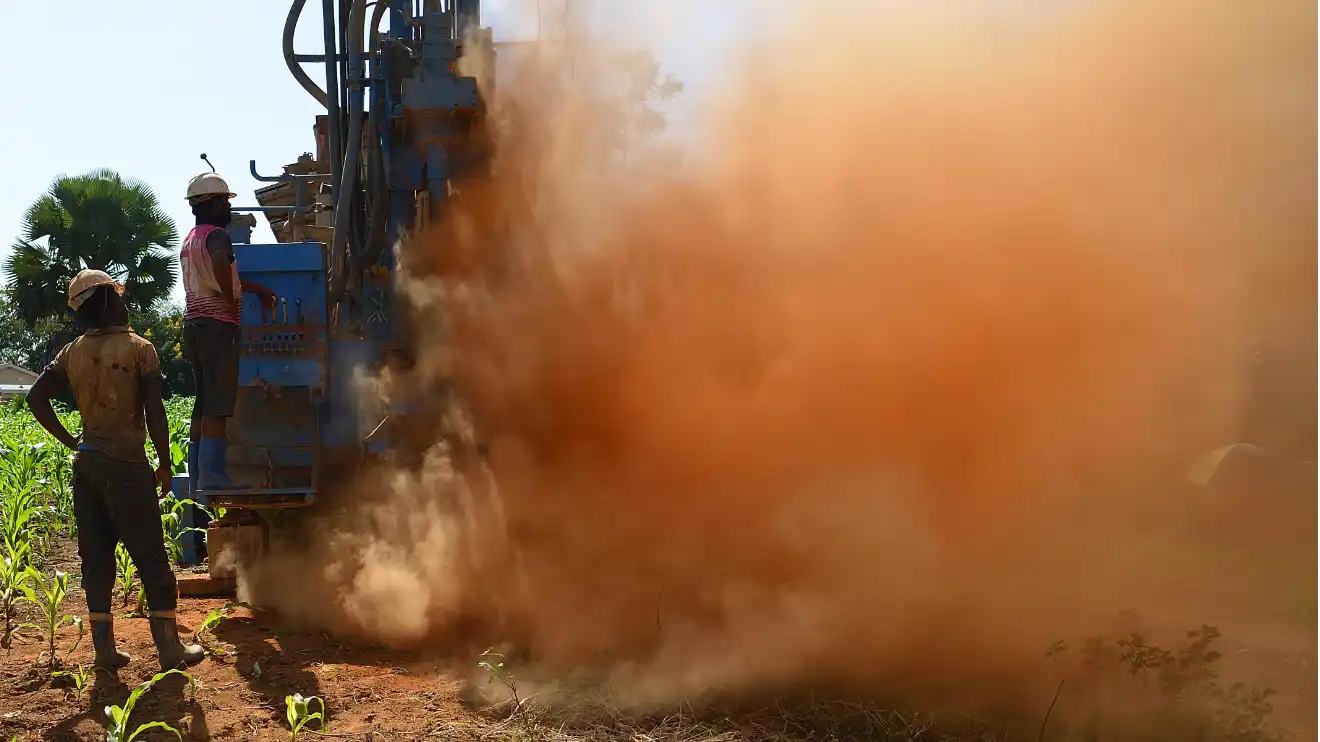
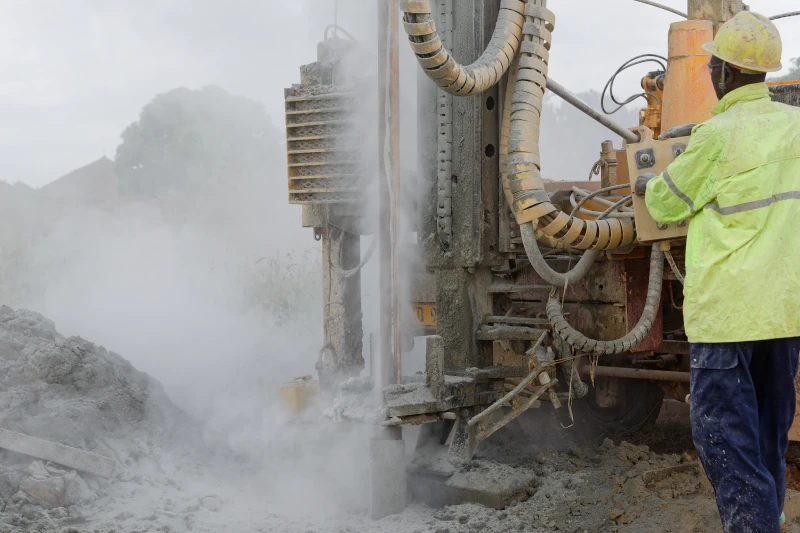
In many regions of Africa, building a well is often the only realistic way to provide permanent access to clean and safe drinking water. Where rivers are far away, seasonally dry or polluted, wells form the basis for health, hygiene and self-determined development for local people.
To give you an impression of the work involved, we have compiled detailed information about the construction of a well.
Drinking water
Drinking water is water for human consumption. It is the most important foodstuff and cannot be replaced. Drinking water must meet high standards to be suitable for drinking, cooking and personal hygiene.
Depending on the contamination, we use various methods – from mechanical filters to chemical or physical methods. This ensures that the water meets local requirements and can be drunk without hesitation.
You can find more information on drinking water here.
Our projects show, how adapted water treatment improves health and makes everyday life in Africa easier in the long term.

Workshops
Our workshops are aimed at committed members of the community with a good education who want to actively participate in local water projects. They provide practical knowledge about water supply, hygiene and sanitation – WASH (opens in a new window). - WASH (opens in a new window).
Participants should have a good knowledge of mathematics, physics and chemistry in order to be able to apply the technical content confidently.

Irrigation
n dry regions, agriculture is often only possible with irrigation – especially in view of climate change. We use efficient irrigation (opens in a new window) to secure harvests and reduce dependence on food aid.
Targeted irrigation increases productivity, protects against soil salinisation and even makes salinated soils usable again. In this way, we sustainably improve the livelihoods of people in semi-arid and arid areas.
Learn more about our irrigation projects and how they help to secure and improve the livelihoods of people in semi-arid and arid regions in the long term.

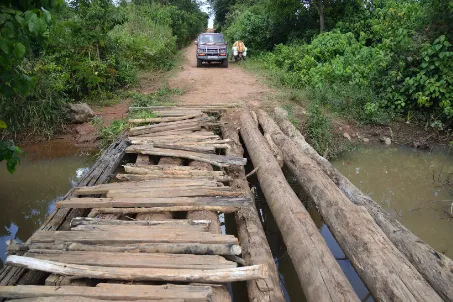
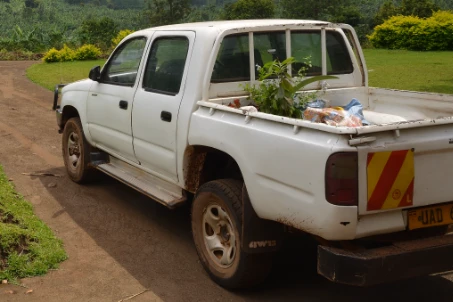
We go miles for water ...
... even to remote places ...
where other organisations do not help