
Clean water, i.e. drinking water, in sufficient quantities is scarce in many parts of Africa. The situation is particularly bad in rural areas. There are often no water pipes, let alone pipes leading into houses. Water usually has to be fetched from springs, ponds or streams a few kilometres away. This water is usually heavily polluted and contaminated with bacteria. It makes people ill, resulting in diarrhoea, worm infections and other diseases. Every day, around 4,000 children die from these preventable diseases.
Your water well donation helps
Groundwater is often the only source of clean water. To access it, wells sometimes have to be drilled up to 200 metres deep. With a bit of luck, around 80 metres is sufficient. A pump – either a hand pump or a solar pump – is installed in the borehole. This is used to extract the clean water. Help us to provide more villages in Africa with wells.
The journey to the water source is often arduous and dangerous for women and children. They spend several hours a day fetching water. On the way, they face dangers from wild animals and snakes. Sometimes violence also occurs on the way to the water source.
Many children cannot go to school because they are busy fetching water. And when they do go, they are so tired that they cannot concentrate in class.
A well in the village therefore solves many problems
- there is enough clean water
- health in the village improves
- Women have more time to cook meals.
- Children can go to school.
- Violence against women and children decreases.
How we build water wells for Africa
The first step in building a well is to find out where there is groundwater underground. To do this, a geologist uses a device called a terrameter to measure the resistance at various points at different depths in the village. Based on the measurements, he can then determine the most promising locations for drilling.
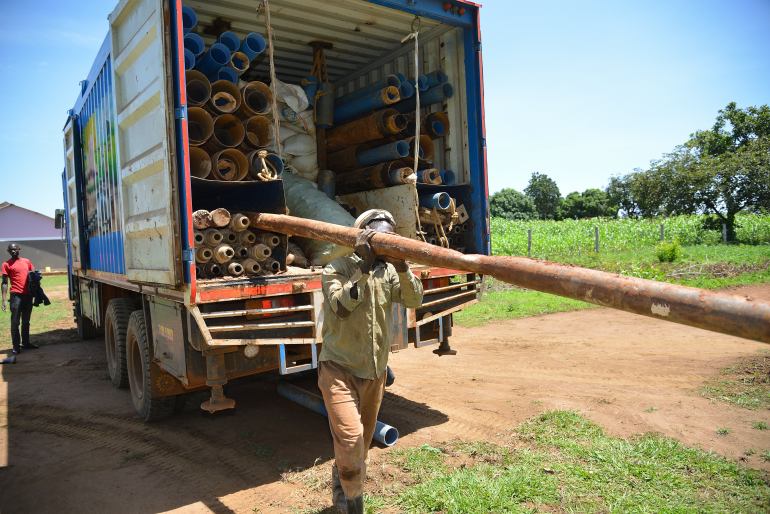
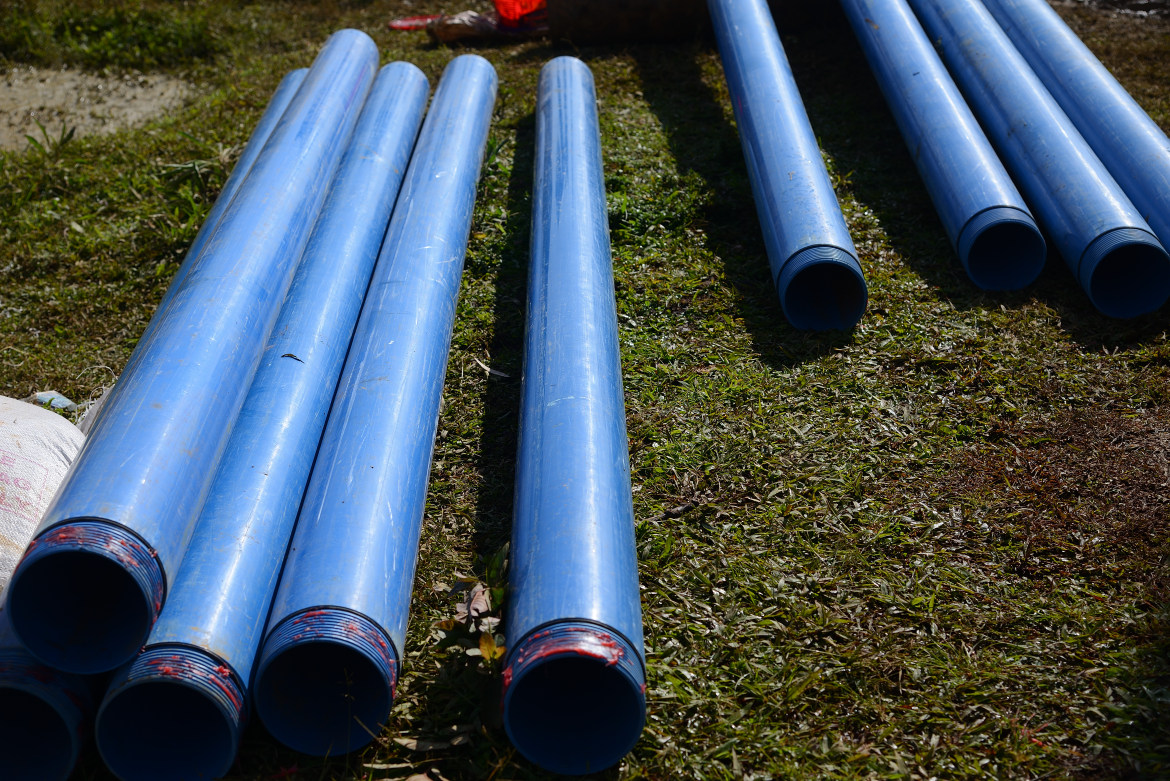
Next, the drilling company arrives with its equipment, including a compressor, drilling rig, drill pipes, hammer, pipes and gravel. The drilling rig is powered by compressed air. The borehole is usually completed after several hours. It has a diameter of about 200 mm. Then the partially permeable pipes (130 mm diameter) are inserted into the borehole. The remaining space is filled with fine gravel. This filters the water before it flows into the pipe. Finally, the pump is installed in the pipe to bring the clean water to the surface. This completes the construction of the well.

How long does it take to build a well in Africa?
A well construction with a hand pump is usually completed after 10 days:
- 1 day drilling, installing pipes and filling gaps with gravel
- 1 day break to allow the groundwater level to recover
- 1 day pumping test to determine how much water is available
- 1 day installing pump and concreting the catchment
- 5-6 days to allow the concrete to dry
A well construction with a solar pump and several taps in the village is usually ready after 3-4 weeks:
- 1 day drilling, installing the pipes and filling the gaps with gravel
- 1 day break to allow the groundwater level to recover
- 1 day pumping test to determine how much water is available. The result is used to select the appropriate pump
- 1 day to select and order the appropriate solar pump and solar system
- 1-2 weeks delivery time for the solar pump and solar system
- 2 days to set up the solar system and install the solar pump in the borehole
- 5 days to build the elevated tank
- 3 days Laying the water pipes to the elevated tank and from there to the taps.
How much does a well cost in Africa?
Costs for wells with hand pumps
The costs of constructing a well vary from country to country and also depend heavily on how far the drilling company has to travel to the project site. If they have to transport their drilling equipment, usually two lorries, over a long distance, it will be more expensive than if they only have to travel a short distance.
On average, you can expect to pay around €7,000 for a well with a hand pump. The water can be collected in buckets and canisters. Pumping with a hand pump is strenuous, especially since the work is often done by children.
Costs for wells with solar pumps
A well with a solar pump involves higher costs. In addition to the solar pump, a solar system, an elevated tank and, if necessary, water pipes are required. You can expect to pay around €12,000 to €15,000. The delivery rate, litres per hour, and the delivery height from the water table to the elevated tank play a major role and determine the price of the pump and the size of the solar system.
A well with a solar pump has the great advantage that the water can flow into the buildings: the solar pump pumps the water into the elevated tank. From there, due to the difference in height, it flows through the water pipe to the washbasins in the rooms. The water can also be piped to various taps in the village.
Find out more about our water pumps projects.

This is particularly useful for hospitals, for example, to ensure that running water is available in operating theatres, treatment rooms and patient rooms. This option therefore contributes significantly to hygiene.

Support our water well charity – give a village clean water with your well donation
With your water well donation, you can help people lead better lives, enable children to go to school and make women's lives safer. Your contribution brings a village one step closer to its own well.